3PL vs 4PL: The Difference, the Costs and Which You Need
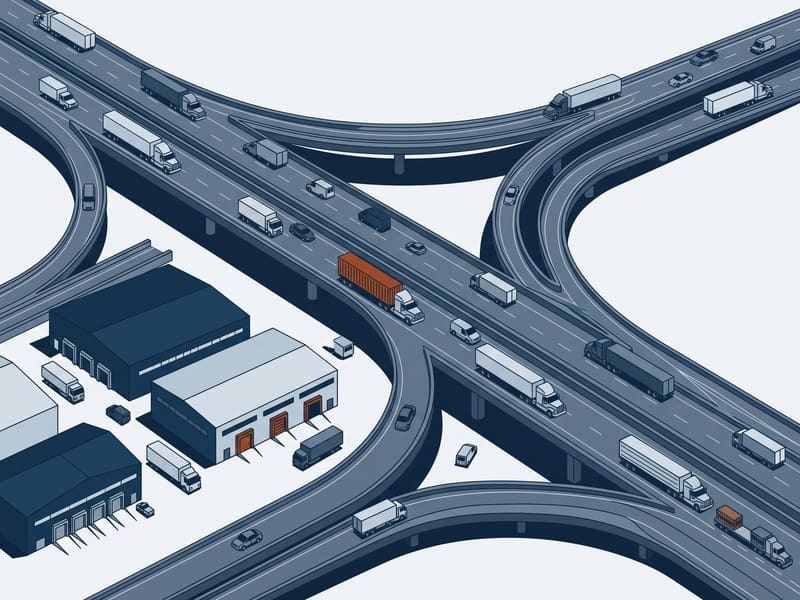
A 3PL does the physical logistics work: it stores your inventory, packs your orders and moves your freight. A 4PL does none of that itself. It manages the 3PLs and carriers that do, as one contractor accountable for the whole chain. We compare the 2 on scope, assets, cost and control, show how each one bills, and set out when a brand outgrows a 3PL alone.
Quick summary
- A 3PL runs logistics work in its own warehouses and trucks, while a 4PL designs and manages the supply chain and hires 3PLs and carriers to run it.
- Most 4PLs own no warehouses or trucks, so their assets are people, software and the contracts they manage for you.
- A 3PL bills per activity, while a 4PL adds a management fee, a percentage of the spend it manages or a share of savings on top of the underlying provider costs.
- A brand with a single warehouse partner and a few carriers needs a 3PL; a 4PL starts to pay once you coordinate several 3PLs, regions or transport modes.
- If one company sells you both, get written terms that its 4PL arm bids your volume against outside providers and shares every bid.
The difference between a 3PL and a 4PL
A 3PL runs the physical work. A 4PL runs the 3PLs.
ASCM’s Supply Chain Dictionary defines third-party logistics as “a buyer and supplier team with a third party that provides product delivery services”. In practice, a third-party logistics provider receives your inventory, stores it, picks and packs orders, and hands them to carriers, in its own buildings with its own staff.
A fourth-party logistics provider sits one level up. It designs the network, chooses and contracts the 3PLs and carriers, watches their performance and answers to you for the result. It is also called a lead logistics provider (LLP). The 4PL is a manager; the 3PL is an operator.
3PL vs 4PL side by side
| 3PL | 4PL | |
|---|---|---|
| Role | Runs warehousing, fulfillment and transport | Designs and manages the whole supply chain |
| What it owns | Warehouses, equipment, sometimes trucks | Usually no physical assets; people and software |
| Focus | Executing orders and shipments | Coordinating providers and cutting total cost |
| Relationship | Transactional, per service | Strategic, multi-year |
| Your point of contact | A separate one per provider | A single one for all providers |
| Technology | A WMS and carrier integrations | A control tower across every provider’s data |
| How it saves you money | Shared space, labor and carrier rates | Procurement, routing and network design |
| Best for | Brands with 1 or 2 logistics partners | Brands juggling several providers, regions or modes |
The last 2 rows decide most cases. A 3PL lowers cost by sharing its building and carrier contracts across clients. A 4PL lowers cost by buying better and redesigning the flow, which only matters once there is enough flow to redesign.
How 3PLs and 4PLs work together
A 4PL does not replace 3PLs. It hires them.
Take a home goods brand selling direct, on Amazon and to 2 retail chains. It runs a fulfillment center on each coast through 2 different 3PLs, and the eastern one also provides contract warehousing near the import port for pallets bound for retail DCs. Freight comes in through an ocean forwarder and goes out with 5 carriers. That is 8 vendors, 8 invoices and 8 sets of reports.
A 4PL takes over the coordination. It tenders the freight, sets the same accuracy and ship-time targets for both 3PLs, merges their data into one inventory view and audits every invoice. The 3PLs keep doing the floor work. Many 4PL relationships start this way, as a 3PL contract that grows until the brand hands over the management too.
How a 3PL and a 4PL get paid
A 3PL bills activity: receiving, storage, pick and pack, packaging, and postage, often with a margin on the carrier rate. A 4PL bills management on top of all of that.
No public rate card exists for 4PL work. The nearest documented model is managed transportation, which Armstrong & Associates describes as paid by a management fee, either a flat amount per shipment or a percentage of purchased transportation, sometimes with a gainshare that splits savings between shipper and provider. 4PL contracts are built from the same 3 levers.
The 1PL to 5PL ladder
| Level | Who it is | What it does |
|---|---|---|
| 1PL | The shipper itself | Moves its own goods with its own trucks and staff |
| 2PL | An asset carrier: trucking line, ocean carrier, airline, parcel network | Moves goods over one leg |
| 3PL | An outsourced logistics operator | Warehousing, fulfillment and transport across carriers |
| 4PL (LLP) | A supply chain manager, usually non-asset | Designs the network, hires and manages the 3PLs and carriers |
| 5PL | A network aggregator, mostly software-led | Pools demand from many shippers to buy capacity at scale |
The first 4 rungs are stable definitions. 5PL is a loose label, and 2 providers using it may mean different things.
Which one you need
| Your situation | Better fit |
|---|---|
| 1 warehouse, DTC plus a marketplace | 3PL |
| 2 or 3 warehouses, all with the same provider | 3PL with a multi-site network |
| Several 3PLs or countries, each with its own reports and invoices | 4PL |
| Freight spend large enough that a few points of savings pays a manager | 4PL, or an in-house logistics lead |
| You want the network redesigned, not only run | 4PL |
Most growing brands sit in the first 2 rows. The move to a 4PL comes with complexity, not size alone: a brand shipping 3,000 orders a day from a single building still needs a 3PL, not a manager of 3PLs.
When one company sells you both
Many large providers run warehouses and sell 4PL management under the same group. That works only if the 4PL arm is walled off from the parent: it bids the parent’s warehouses against outside providers, shares every bid with you and lets you move volume away without penalty. Without those terms, the 4PL is a sales channel for its parent’s buildings.
Frequently asked questions
Is a 4PL more expensive than a 3PL?
Yes on the invoice, because a 4PL's fee sits on top of the 3PL and carrier costs it manages. It is cheaper overall only if its procurement, routing and network design cut those underlying costs by more than its fee. On a small network with a single warehouse, that rarely happens.
Can a 3PL also act as a 4PL?
Yes, and many large providers sell both. The 3PL side runs warehouses and transport, while a separate management team acts as the 4PL and hires other providers alongside the parent's own. Ask how the 2 arms are separated before you sign, because the 4PL should pick the best provider, not the parent's building.
Does a 4PL own warehouses?
Usually not. A 4PL is typically non-asset: it brings people, software and supplier contracts and pays 3PLs and carriers to do the physical work. When a 4PL belongs to a group that does own warehouses, those buildings should compete for your volume like any other provider.
Is UPS a 3PL or 4PL?
It depends on which part of UPS you hire. Its parcel network is a carrier, the 2PL rung of the ladder, while its supply chain and logistics units run warehouses, freight and customs work the way a 3PL does. Large carriers' logistics arms can also take lead logistics contracts for big shippers, which is 4PL work.
Is Amazon a 3PL or 4PL?
For sellers, Amazon acts as a 3PL. Amazon describes Fulfillment by Amazon as sellers sending stock to its fulfillment centers while Amazon picks, packs, ships and handles customer service and returns, and its Warehousing and Distribution service stores bulk stock and ships to non-Amazon channels too. Neither service manages other providers on your behalf, which is what a 4PL does.
What is an example of 4PL logistics?
A typical 4PL arrangement is a consumer brand with 2 fulfillment 3PLs, an ocean forwarder and 5 carriers, all managed by one outside team. That team tenders freight, sets service targets, merges every provider's data into one report and audits every invoice. The brand deals with the 4PL instead of 8 separate vendors.
What is a lead logistics provider?
A lead logistics provider (LLP) is the older name for a 4PL. It is the one provider accountable for coordinating every other logistics provider in a supply chain. Some large 3PLs still use the term for their management contracts.