3PL Warehousing: How It Works, Costs and How to Choose
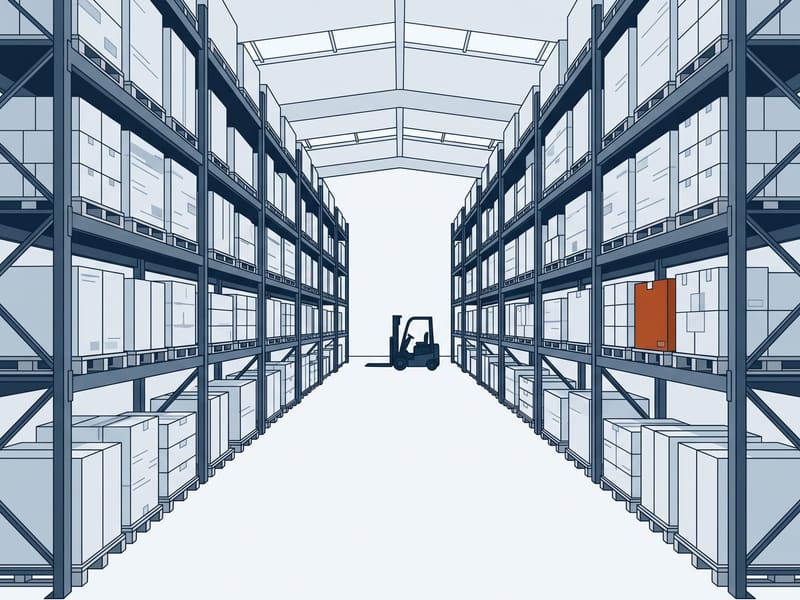
3PL warehousing means storing your inventory in a building run by a third-party logistics provider, which receives it, tracks it and ships it out on your instructions. You rent space, labor and software instead of signing a lease and hiring a crew. We cover what happens inside the building, the main types of 3PL warehouse, shared versus dedicated contracts, what storage and handling cost, and how to pick a provider.
Quick summary
- A 3PL warehouse stores and ships inventory for client brands and never owns the goods it holds, which is how BLS defines the whole warehousing industry.
- Shared (public) warehousing runs month to month on a rate card, while dedicated contract warehousing typically runs 1 to 3 years, according to Armstrong & Associates.
- Storage is billed per pallet position, shelf, bin or cubic foot, and handling per container, pallet, carton or order; our 160-pallet example month costs $9,450 to $15,060 before freight.
- Handling, not storage, is 64 to 65% of that example bill, because it is labor, and BLS puts the median warehouse order filler at $21.49 an hour in 2025.
- Choose on fit: product type, order profile, systems and the provider's other clients matter more than the headline pallet rate.
What 3PL warehousing is
3PL warehousing is outsourced storage with the labor attached. You send inventory to a building run by a logistics provider; it receives, stores, counts and ships the stock under a contract, and you pay for the space and the work you use.
Storage is the base service of any third-party logistics provider, and most sell pick and pack, freight and returns on top of it. The Bureau of Labor Statistics defines the warehousing and storage industry as establishments that store goods they do not sell, where storage is always more than an incidental service, with labeling, breaking bulk, inventory control, light assembly and pick and pack as common add-ons. BLS counted 23,848 private warehousing and storage establishments in the first quarter of 2026 (preliminary).
A 3PL warehouse is not a private warehouse. A private warehouse belongs to the company whose goods are inside and ships only that company’s orders. A 3PL runs its building for clients, on software built to bill several of them at once.
The money follows the same line. Armstrong & Associates puts the US 3PL and contract logistics market at $323.4 billion in 2025, of which $72.7 billion was contract warehousing and distribution center management.
On the logistics ladder, the brand is the first party, the carrier the second and the warehouse operator the third. A fourth-party logistics manager oversees several warehouses and carriers without running any of them.
What happens inside a 3PL warehouse
| Activity | What it involves | How it is usually billed |
|---|---|---|
| Receiving | Unloading, counting against the ASN, inspecting, logging discrepancies | Per container, pallet, carton or hour |
| Put-away | Moving stock to a pallet rack, shelf or bin location in the WMS | Included in receiving, or per pallet |
| Storage | Holding stock in the right conditions, secured and insured to the contract cap | Per pallet position, shelf, bin or cubic foot, monthly |
| Inventory control | Cycle counts, lot and expiry tracking, damage reports | Included, or per count or hour |
| Picking | Pulling full pallets, cases or single units against orders | Per pallet, case, order or unit |
| Packing and shipping | Packing, labeling, palletizing and loading carriers | Per order or pallet, plus materials |
| Returns and reporting | Inspecting returns, restocking, stock and activity reports | Per return; reports usually included |
Receiving sets up everything after it. A carton put away under the wrong SKU is a mis-pick waiting to happen and a count that will not reconcile, so good warehouses hold unlabeled or over-shipped cartons aside instead of forcing them into stock.
The billing column is where 3PLs differ most. Two warehouses with the same pallet rate can produce very different invoices once receiving, picking and accessorial charges are added, which is why a rate card only means something against your own month of activity.
Types of 3PL warehouse
| Type | What it is for | Typical user |
|---|---|---|
| Public (shared) | Space and labor rented by many clients on standard rates | Growing and seasonal brands |
| Contract (dedicated) | A building or section run for one client under a multi-year deal | Steady, high-volume shippers |
| Distribution center | Moving bulk inbound to stores and customers on a schedule | Retail and B2B suppliers |
| Fulfillment center | Picking and shipping many small ecommerce orders daily | DTC and marketplace sellers |
| Cold storage | Refrigerated and frozen zones with temperature records | Food, beverage, pharma |
| Bonded | Imports held before customs duty is paid | Importers re-exporting or delaying duty |
| Hazmat | Permitted storage for regulated materials | Chemicals, aerosols, batteries |
“Public” describes who can rent the space, not who owns the building. A public warehouse is a privately owned business open to any client, usually on short terms.
The line between the middle rows has blurred. A fulfillment center is a warehouse laid out for speed, with stock slotted by how fast it sells and carrier pickups every day, and many 3PL buildings run a fulfillment floor beside bulk racking for retail orders.
Shared vs dedicated warehousing
The biggest decision in 3PL warehousing is not the provider. It is whether you share a building or get one of your own.
Armstrong & Associates describes contract warehousing agreements as typically running 1 to 3 years, with some extending to 10 years or more, and it leaves short-term public warehousing out of that segment entirely.
| Shared (public, multi-client) | Dedicated (contract) | |
|---|---|---|
| Term | Month to month or 1 year | Typically 1 to 3 years, some 10 or more |
| Pricing | Standard rate card per pallet, carton and order | Negotiated: space charge plus handling rates, or open-book cost plus a management fee |
| Minimums | A monthly minimum spend | A volume commitment for the whole term |
| Space | Your pallets among other clients’ | A building or walled-off section for you alone |
| Labor | A shared crew scheduled across clients | A team trained on your products and processes |
| Racking, WMS, equipment | The 3PL’s standard setup | Configured for your operation, sometimes at your cost |
| Best for | Seasonal, growing or unpredictable volume | Steady volume that fills a building, or special handling |
Shared space is cheaper to enter and easier to leave. Dedicated space buys control and a crew that knows your SKUs, at the price of a commitment that outlasts a bad year.
Many 3PLs also sell a middle option: a dedicated zone inside a shared building, with your own racking section and a named lead, billed on the shared rate card plus a fixed monthly charge for the reserved space.
What 3PL warehousing costs
Every provider publishes its own rate card, but the lines repeat. The example below is a home goods brand holding 160 pallets, importing 2 containers a month and shipping to retailers and direct to consumers. The rates are an example set in ranges, not a quote.
Handling is labor, and it moves with wages. BLS data for the warehousing and storage industry puts the median stock clerk and order filler at $21.49 an hour in 2025 and the median forklift operator at $23.16, and average hourly earnings across the industry were $26.74 in July 2026 (preliminary). Handling rates carry those wages plus supervision, equipment and margin, so they track the local labor market, while storage rates track local rent.
How storage is measured matters as much as the rate. A brand averaging 150 pallets that peaks at 180 on delivery day pays for 30 extra positions, 20% more, if storage is counted on the peak.
Beyond the core lines, most rate cards carry accessorial charges that only show up when something unusual happens:
- Labeling and rework: relabeling cartons that arrived without scannable barcodes, often billed per unit or per hour.
- Pallet building: re-stacking or shrink-wrapping pallets that arrived unstable or over height.
- Special projects: retail ticketing, kit assembly or inspections, billed by the hour.
- Setup and minimums: a one-time onboarding fee and a monthly floor on total charges.
The other line to watch is stock that does not sell. A 3PL charges for a pallet of slow movers exactly what it charges for a best seller, every month.
Why brands use a 3PL warehouse
Good fit:
- No lease, no equipment. Racking, forklifts, scanners, dock doors and a WMS come with the space instead of on your balance sheet.
- Seasonal volume. You rent 300 pallet positions in October and 120 in February, instead of leasing for the peak all year.
- A second location. A warehouse on the other coast shortens delivery times without opening a site of your own.
- Regulated or specialist storage. Cold, bonded or hazmat space that would take months of permits and build-out to create.
- Carrier access. Daily pickups and freight rates negotiated across every client in the building.
Wrong call:
- Very small or irregular stock. A few pallets with rare orders can cost less in self-storage and a courier account.
- Constant hands-on work. Products that need daily inspection, custom finishing or frequent re-spec by your own team.
- Building-sized volume. Stock that fills a building year round may be cheaper in a dedicated contract or your own lease.
Where the warehouse should be
Location decides freight cost more than any rate card does. Importers want stock near the port, to cut the drayage run from the terminal; brands shipping parcels nationally want the middle of the country, where ground delivery reaches most addresses in fewer days; and retail suppliers want to be near their customers’ distribution centers.
| Location | Suits | Trade-off |
|---|---|---|
| Near a major port | Importers with steady container volume | Higher rent, shorter drayage |
| Central US | Parcel shippers selling nationwide | Longer inbound haul from the coasts |
| Near customers or retail DCs | Suppliers on strict delivery windows | Tied to a few customers’ locations |
The trade-off is rent against freight. An importer bringing containers through the Port of New York and New Jersey can hold stock in 3PL warehouses in northern New Jersey within a short truck run of the terminals, or push it inland, where space is easier to find and the drayage bill is longer. Neither is right in general; the right answer comes from your inbound volume, your customers’ locations and the rate cards side by side.
How to choose a 3PL warehouse
Start from your own numbers: pallets on hand at peak and at the low point, inbound containers or pallets a month, and outbound orders by type (pallet, case, parcel). A provider can only quote accurately against that profile, and you can only compare quotes that were built on it.
Then plan the move as a project: contract and rate card, WMS integration and testing, and a first inbound shipment counted and reconciled before orders go live. Send a partial shipment first when you can, so the count and the integration are proven on a small batch before the rest of the stock follows.
The red flags are consistent:
- Vague pricing: a quote that stays general after you have sent your volumes.
- No evidence: no count results, no references with products like yours.
- A crowded floor: pallets in the aisles, trailers waiting at the dock, visibly short staff.
- No questions asked: a sales process that never asks what you sell or how it ships.
Frequently asked questions
What does a 3PL warehouse mean?
A 3PL warehouse is a building run by a third-party logistics provider that stores inventory for other companies and ships it on their instructions. The operator supplies the space, staff, racking and warehouse software, and clients pay for what they use. Most also offer pick and pack, kitting and returns processing.
How much does a 3PL warehouse cost?
There is no standard price, because each 3PL sets its own rate card for storage and handling. In our example, a brand holding 160 pallets and shipping wholesale and DTC orders pays $9,450 to $15,060 a month before freight, with pallet storage at $18 to $28 a position. Location, product type and how storage is measured move the number most.
Is Amazon a 3PL warehouse?
For its sellers, Amazon works like one. Amazon describes Fulfillment by Amazon as sellers sending stock to its fulfillment centers, where Amazon picks, packs, ships and handles returns, and its Warehousing and Distribution service holds bulk inventory and ships it to Amazon and non-Amazon channels. Storage there is billed monthly by cubic feet, with an extra charge on items held more than 181 days.
What are the disadvantages of using a 3PL warehouse?
You lose direct control of the floor, so a counting or packing error becomes a ticket rather than a quick fix. You share labor and dock time with other clients at peak, and storage measured badly or long-term fees can inflate the bill. Moving to another warehouse later costs freight, receiving fees and days of downtime.
What is the difference between a warehouse and a distribution center?
A warehouse is built to hold stock, sometimes for months, while a distribution center is built to move it, often within days. A distribution center takes in bulk shipments and sends out store and customer orders on a fixed schedule. Many 3PL buildings do both under one roof.
How long is a 3PL warehouse contract?
Shared warehousing is often month to month or a 1-year agreement on a standard rate card. Dedicated contract warehousing typically runs 1 to 3 years, and some deals extend to 10 years or more, according to Armstrong & Associates. Longer terms usually buy lower rates or custom equipment in exchange for a volume commitment.
Can a 3PL warehouse store cold or hazardous goods?
Only a building set up for it. Cold storage needs refrigerated or frozen zones with temperature logs, and hazardous materials need permitted storage, trained staff and segregation rules. Ask for the permits and certifications in writing before sending a single pallet.
Who owns the inventory in a 3PL warehouse?
You do. The 3PL holds your goods under a warehousing agreement without taking title, and its liability for loss or damage is set by that agreement. Keep your own inventory insurance for the value above the contract's cap.