Drayage: What It Is, How It Works and What Drives the Cost
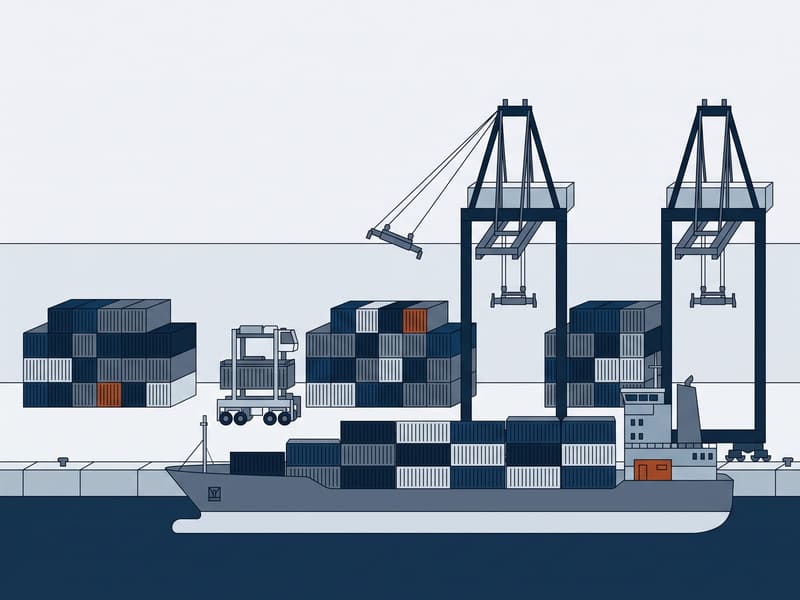
Drayage is the short truck move of a shipping container between a port or rail ramp and a nearby warehouse, yard or terminal. It is the first leg an import takes on land, and the leg where extra charges pile up fastest. We explain the types of drayage, how a move runs, the 2 clocks behind demurrage and detention, and how to read a drayage quote line by line.
Quick summary
- Drayage moves a container a short distance, usually within one metro area, between a port or rail terminal and a warehouse, yard or another terminal.
- An ocean import usually needs drayage at both ends: from the factory to the origin port, and from the destination port to the warehouse.
- A drayage quote is a base rate per container move plus accessorial charges for fuel, chassis days, pre-pulls, yard storage, waiting time and overweight loads.
- Demurrage runs while a loaded container sits in the terminal past its free time, and detention runs while it is outside the terminal until the empty is returned.
- Under federal rules, a demurrage or detention invoice must be issued within 30 days and carry the required details, or the billed party does not have to pay it.
What drayage means
Drayage is a short truck move of freight, almost always a shipping container, from one point in a transport chain to the next. The classic move runs from a marine terminal to a warehouse a few miles away, but a warehouse-to-rail-ramp or terminal-to-terminal move is drayage too.
An ocean import usually needs drayage twice: from the factory to the origin port, and from the US port of discharge to the warehouse. This guide covers the US end.
| Move | Distance | Equipment | Example |
|---|---|---|---|
| Drayage | Short, usually within one metro area | Container on a chassis | Port terminal to a warehouse 20 miles away |
| Over-the-road trucking | Long haul, across states | 53-foot dry van or reefer | That warehouse to a DC 600 miles inland |
| Intermodal | Long haul by rail, with drayage at each end | Container on a railcar | West Coast port to a Chicago rail ramp |
| Cartage | Short local moves of loose freight | Box truck or straight truck | Air freight from an airport to a local warehouse |
Types of drayage
| Type | What moves | When it is used |
|---|---|---|
| Pier or port | Container from a marine terminal to a nearby warehouse, or back | Most import deliveries |
| Intermodal | Container between a port or warehouse and a rail ramp | Imports moving inland by rail |
| Shuttle | Container to an off-dock yard to wait | The warehouse is full or terminal free time is running out |
| Intra-carrier | Container between 2 terminals of the same carrier | Transfers inside one rail or ocean network |
| Inter-carrier | Container between terminals of different carriers | A handoff from an ocean carrier to a railroad |
| Store door | Container delivered straight to the final customer’s dock | A single-destination import with no stop in between |
Not every container goes to the importer’s own building. Some go to a bonded warehouse near the port, where the goods wait with the duty unpaid, and some are emptied at a transload building into 53-foot trailers for a long run inland.
How a drayage move runs
- Container released. Once the vessel is discharged, customs releases the goods and the ocean freight is paid, the terminal shows the container as available.
- Delivery order sent. The importer, forwarder or customs broker sends the dray carrier the container number, pickup terminal, last free day and delivery address.
- Pickup booked. The carrier books a terminal appointment where the terminal requires one, and pairs the container with a chassis from a pool or its own fleet.
- Delivery. The driver either waits while the container is emptied (a live unload) or leaves it on its chassis for the warehouse to unload later (a drop).
- Empty returned. The empty goes back to the terminal or depot the ocean carrier names, which stops the detention clock.
At the warehouse the freight is received into storage or cross-docked to outbound trucks the same day, which decides whether the building wants a live unload or a drop.
Demurrage, detention and the import clocks
Two clocks start around discharge, and most avoidable drayage cost comes from one of them running out. In common usage, demurrage is charged while a loaded import container stays in the terminal past its free time, and detention, also called per diem, while the container is outside the terminal past its free time, until the empty is returned. Free time is set by the carrier’s or terminal’s tariff, or the importer’s contract, and it varies.
| Stage | Clock running | Billed by | What stops it |
|---|---|---|---|
| In the terminal, within free time | Free time counting down | Nobody yet | Pickup before the last free day |
| In the terminal, past the last free day | Demurrage | Ocean carrier or terminal operator | Gate out, by delivery or a pre-pull |
| At the dray carrier’s yard after a pre-pull | Yard storage, with detention free days counting down | Dray carrier | Delivery to the warehouse |
| At the warehouse | Chassis days, with detention free days counting down | Chassis provider, via the dray carrier | Unload and return the empty |
| Out of the terminal, past free days | Detention (per diem) | Ocean carrier | Empty returned to the terminal or depot |
The federal rules at 46 CFR part 541 treat both charges together as “demurrage or detention” when they come from ocean carriers, marine terminal operators or NVOCCs, and they set how those charges must be invoiced. The invoice has to be issued within 30 calendar days of the date the charge was last incurred, or the billed party does not have to pay it. It must show the container number, the free time with its start and end dates, the availability date, the dates charged and the tariff or contract rule, among other items, and leaving out any required item removes the obligation to pay. The billed party then has at least 30 days from the invoice date to ask for a refund or waiver.
What a drayage quote includes
A drayage quote prices the move per container, not by weight, and adds accessorials for everything around the move. Distance sets the base rate; time inflates the rest, through a driver waiting at a congested terminal, a chassis kept for extra days or a container pulled to a yard and moved twice. An importer landing containers at the Port of Savannah can hold stock at 3PLs near Savannah, a short dray from the terminal, or at a building farther inland, trading rent against a longer run on every container.
On one container whose schedule slipped, those lines add up like this:
Frequently asked questions
What is the difference between freight and drayage?
Freight is the whole shipment and the whole move; drayage is one short leg of it, the truck move between a port or rail ramp and the next stop. An import from Shanghai to Dallas might travel by ship, rail and truck, and only the truck moves to and from the terminals are drayage.
How do you pronounce drayage?
It is pronounced DRAY-ij, with the first syllable rhyming with day. The word comes from the dray, a low cart once used to haul goods from the docks.
What is drayage and demurrage?
Drayage is the truck move that takes a container out of the terminal; demurrage is the charge for leaving a loaded container in the terminal past its free time. The two are linked because a late drayage pickup is the usual cause of demurrage.
What does DND mean in shipping?
D&D, sometimes written DND, stands for demurrage and detention: the charges for keeping a container in the terminal, or out of it, past its free time. Federal rules at 46 CFR part 541 require these invoices to be issued within 30 days and to show the free time, dates and tariff rule, or they do not have to be paid.
Why is drayage so expensive?
Because the move is short but the time around it is long. Drivers wait at congested terminals, chassis are rented by the day, and missed pickup windows turn into pre-pulls, yard storage and second moves, all priced per container rather than per mile.
Who arranges drayage for an import?
Usually the freight forwarder, who books it with the ocean freight, but a customs broker, a 3PL or the importer can book it directly. Whoever books it needs the delivery order, the last free day and the warehouse appointment.
What is a pre-pull in drayage?
A pre-pull is picking up a container from the terminal before the warehouse can take it and parking it at the dray carrier's yard. It stops demurrage at the terminal but adds yard storage, chassis days and a second move, so it pays only when the demurrage it avoids is higher.