Transloading: Container to Trailer, Costs and When It Pays
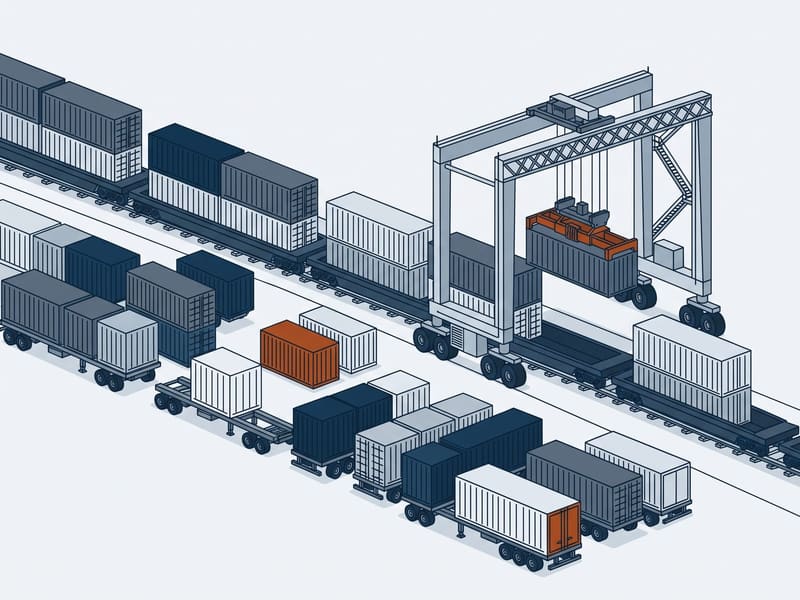
Transloading is moving freight out of one piece of equipment and into another to change mode, most often from an ocean container into a 53-foot domestic trailer near the port where it landed. Importers do it to send the container back early and carry the goods inland in larger equipment. We explain the steps, the container-to-trailer math, the fees, and the cases where the freight should stay in the box.
Quick summary
- Transloading unloads an ocean container or railcar and reloads the freight into different equipment, usually a 53-foot domestic trailer, at a building near a port or rail terminal.
- Emptying the container near the port sends it back to the carrier quickly, which limits detention, while the goods travel inland in domestic equipment.
- A common transload turns 3 forty-foot containers into 2 fifty-three-foot trailers, removing 1 inland load for every 3 containers when the freight is light enough.
- Federal rules cap trucks on the Interstate System at 80,000 pounds gross, so dense freight hits the weight limit before it fills the trailer and the saving disappears.
- Keep the freight in the container when it is bound for one destination, is heavy, or cannot take another round of handling.
What transloading is
Transloading is unloading freight from one piece of equipment and reloading it into another. For an importer, that almost always means an ocean container emptied at a building near the port or rail terminal where it arrived, with its cartons or pallets loaded into a 53-foot domestic trailer, a smaller truck or a domestic railcar. The container goes back to the ocean carrier; the goods continue in domestic equipment.
It sits between 2 neighboring jobs. The container reaches the transload building on a drayage move from the terminal, and the dock work itself resembles cross-docking at a freight terminal, except that the equipment changes type.
| Term | What happens | Equipment changes? |
|---|---|---|
| Transloading | Freight moved from one mode’s equipment to another’s, such as container to trailer | Yes |
| Cross-docking | Freight moved from inbound trucks to outbound trucks, sorted by destination | Usually no |
| Drayage | Container trucked a short distance, such as port to warehouse | No, the container moves whole |
| Intermodal | Container moved a long distance by rail and truck without being opened | No, the container moves whole |
| Transshipment | Container moved from one ship to another at an intermediate port | No, the container moves whole |
How transloading works, step by step
- Dray the container in. After customs release, the container is picked up at the terminal and delivered to the transload building, usually a short run from the port.
- Check and unload. The seal and documents are checked, the container is unloaded, and cartons are counted against the packing list, with damage photographed.
- Sort and build. Cartons are sorted by destination, purchase order or SKU. Floor-loaded cartons are stacked onto pallets, wrapped and labeled when the receiving DC wants pallets.
- Load outbound. Pallets or cartons go into 53-foot trailers by destination, with the weight spread across the axles.
- Return and dispatch. The empty container goes back to the terminal or depot, and the trailers leave on their DC appointments by truck or domestic intermodal.
The container-to-trailer math
A 53-foot trailer holds more than a 40-foot container, and a common transload turns 3 forty-foot containers into 2 domestic trailers. That removes 1 inland load for every 3 containers, and it sends the ocean containers back to the carrier within days of discharge instead of after a long round trip inland and back.
Weight decides whether the ratio holds. Federal rules cap gross vehicle weight at 80,000 pounds on the Interstate System, with no more than 20,000 pounds on a single axle and 34,000 on a tandem, and the tractor and empty trailer use a large share of that. Light freight fills a trailer by space first, so 3 into 2 works. Dense freight reaches the weight limit first, so it needs as many trailers as it had containers, and the transload adds handling without saving a load. States can permit heavier trucks only for loads that cannot be broken down, and cartons always can.
The typical case starts at Los Angeles and Long Beach, where transload buildings cluster within a short dray of the terminals and imports bound for Texas, the Midwest and the East are split off before the long haul. 3PLs around Los Angeles differ mainly in how close their docks sit to the terminals and whether they palletize and label on the same shift. Here is the math for 3 containers from Long Beach to a DC in Dallas, assuming the tractor and trailer leave room for 44,000 pounds of cargo (the real allowance depends on the equipment):
| Cargo per container | Total for 3 containers | 53-foot trailers needed | Inland loads saved |
|---|---|---|---|
| 12,000 lb (bedding, plastics) | 36,000 lb | 2 | 1 |
| 20,000 lb (housewares) | 60,000 lb | 2 | 1 |
| 29,000 lb (canned goods) | 87,000 lb | 2, both near the limit | 1, if the pallets also fit by space |
| 38,000 lb (tile, hardware) | 114,000 lb | 3 | 0 |
Transload or keep it in the container
| Situation | Transload near the port | Keep it in the container |
|---|---|---|
| Destination | Far inland, or split across several DCs | One DC near the port or near a rail ramp |
| Freight density | Light enough to fill a trailer by space | Heavy enough to weigh out a trailer |
| Receiver’s requirements | Pallets, labels or appointments the factory did not prepare | Floor-loaded cartons accepted as shipped |
| Goods | Sturdy cartons that take another round of handling | Fragile goods, where every touch risks damage |
| Detention exposure | A long inland round trip would run past the free days | The container is back inside its free days anyway |
When the answer is to keep it, the container moves whole: by truck to the customer’s door, or on a carrier’s intermodal service to an inland ramp and drayed from there. A third path skips both. An importer who wants to hold stock near the port without paying the duty yet can enter it into bonded warehouse storage and pay as goods are withdrawn.
What transloading costs
Transload buildings price by the container or by the pallet, and the lines repeat: unload and count, palletize and wrap, label, load outbound, and storage once the free period ends. The drayage in and the outbound freight are separate bills.
For the housewares example, 3 containers at these rates add $2,223 to $4,140 of handling. The transload pays when the inland load it removes, plus the detention days it avoids, is worth more than that.
Frequently asked questions
What is the difference between transloading and drayage?
Drayage moves a container whole over a short distance, such as port to warehouse. Transloading empties the container into other equipment, so most imports that are transloaded take a drayage move first, from the terminal to the transload building.
Can you give an example of transloading?
Three 40-foot containers of housewares land at Long Beach for a DC in Dallas. They are drayed to a building near the port, unloaded and palletized, and the freight leaves in 2 domestic 53-foot trailers while the empty containers go back to the carrier.
What is the difference between transloading and cross-docking?
Both move freight from inbound to outbound equipment without storing it. Transloading changes the type of equipment, usually ocean container to domestic trailer, while cross-docking usually moves freight between trucks and centers on sorting it by destination.
Is transloading the same as intermodal?
No. Intermodal moves a sealed container by rail and truck without opening it, while transloading opens the container and moves the freight into different equipment. A transload can feed an intermodal move, with the freight reloaded into a domestic 53-foot container for the rail leg.
What is the difference between transloading and transshipment?
Transshipment moves a container from one ship to another at an intermediate port, with the container unopened. Transloading happens on land and moves the freight itself into different equipment, most often a truck trailer.
How long does transloading take?
The dock work on one container takes a crew hours, but the real schedule is set by the terminal's free time and the outbound appointments. Book the transload and the trailer appointments before the vessel arrives, so the container is emptied and returned inside its free days.
Is transloading cheaper than shipping the container direct?
It is when the freight is light enough for 3 containers to fit in 2 trailers and is going far inland, because an inland load disappears and the containers stop running up detention. For heavy freight that weighs out a trailer, it only adds handling.
Do I need a customs broker for transloading?
Yes, for imports: transloading does not replace the customs entry. The broker files the entry and clears the goods, usually before the container leaves the terminal, and the transload building works from the released container.